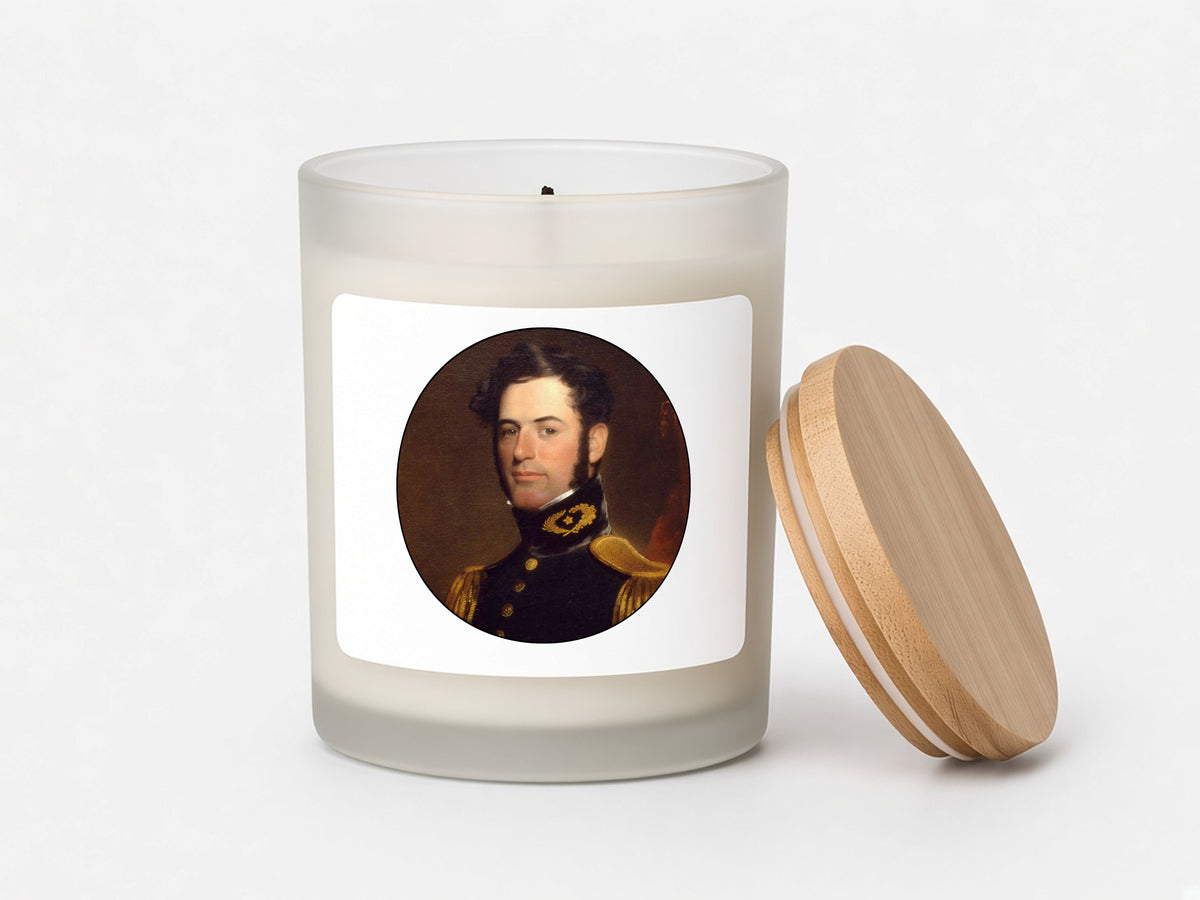
Robert E. Lee Portrait Candle | Civil War History Gift
Robert E. Lee Portrait Candle | Civil War History Gift
Couldn't load pickup availability
Share
The Face Behind the Name
The Face Behind the Name
Robert E. Lee (1807–1870) served for decades in the United States Army before resigning his commission in 1861 to lead Confederate forces during the Civil War. His military reputation became central to later narratives about the conflict, but his decision placed him in the service of a rebellion devoted to preserving slavery.
Lee was born into a prominent Virginia family and built a long career in the United States Army before the Civil War. A West Point graduate, he earned distinction as an engineer and during the Mexican-American War. When Virginia seceded, he chose to resign his U.S. commission and eventually command the Confederate Army of Northern Virginia. His battlefield decisions made him one of the war's most closely studied generals, particularly during campaigns in the eastern theater.
After the conflict, Lee became the focus of a powerful postwar memory that often emphasized personal honor and military skill while minimizing the Confederacy's commitment to slavery. That “Lost Cause” mythology shaped monuments, textbooks and public commemoration for generations. Lee himself enslaved people and fought for a government founded to protect slavery. His biography requires more than weighing tactics or admiring a dignified portrait: it demands attention to the cause, consequences and later political uses of his reputation. The distinction between historical figure and constructed icon is especially important here.
After the war, Lee's image was reshaped by Lost Cause mythology, which celebrated Confederate commanders while minimizing slavery's central role in secession. The contrast between the experienced prewar officer and the Confederate leader is essential to understanding his place in American history.
Lee's portrait has been used to promote very different understandings of the Civil War. For some audiences it became an emblem of military leadership; for others it represents a sanitized memory of the Confederacy. Historical clarity requires acknowledging the cause he served and the later mythology around him. The face behind the familiar name is inseparable from both military history and the politics of remembrance.
Product Details & Care Instructions
Product Details & Care Instructions
Portrait candle with a historical design on the vessel. Available sizes and fragrances are displayed in the product options. Candle materials, container style and burn time vary by fulfillment model.
Candle Care & Safety
- Trim the wick to approximately 1/4 inch before lighting.
- Burn on a level, heat-resistant surface, away from drafts and flammable objects.
- Never leave a burning candle unattended. Keep away from children and pets.
- Allow wax to cool completely before moving the container.
- Stop burning when approximately 1/2 inch of wax remains.
A Note About Product Images
A Note About Product Images
Our product images include AI-generated lifestyle scenes and digital product mockups intended to illustrate how each item may look. While we strive to represent our designs, artwork placement, colors and product details accurately, the actual manufactured product may vary slightly from the images shown.