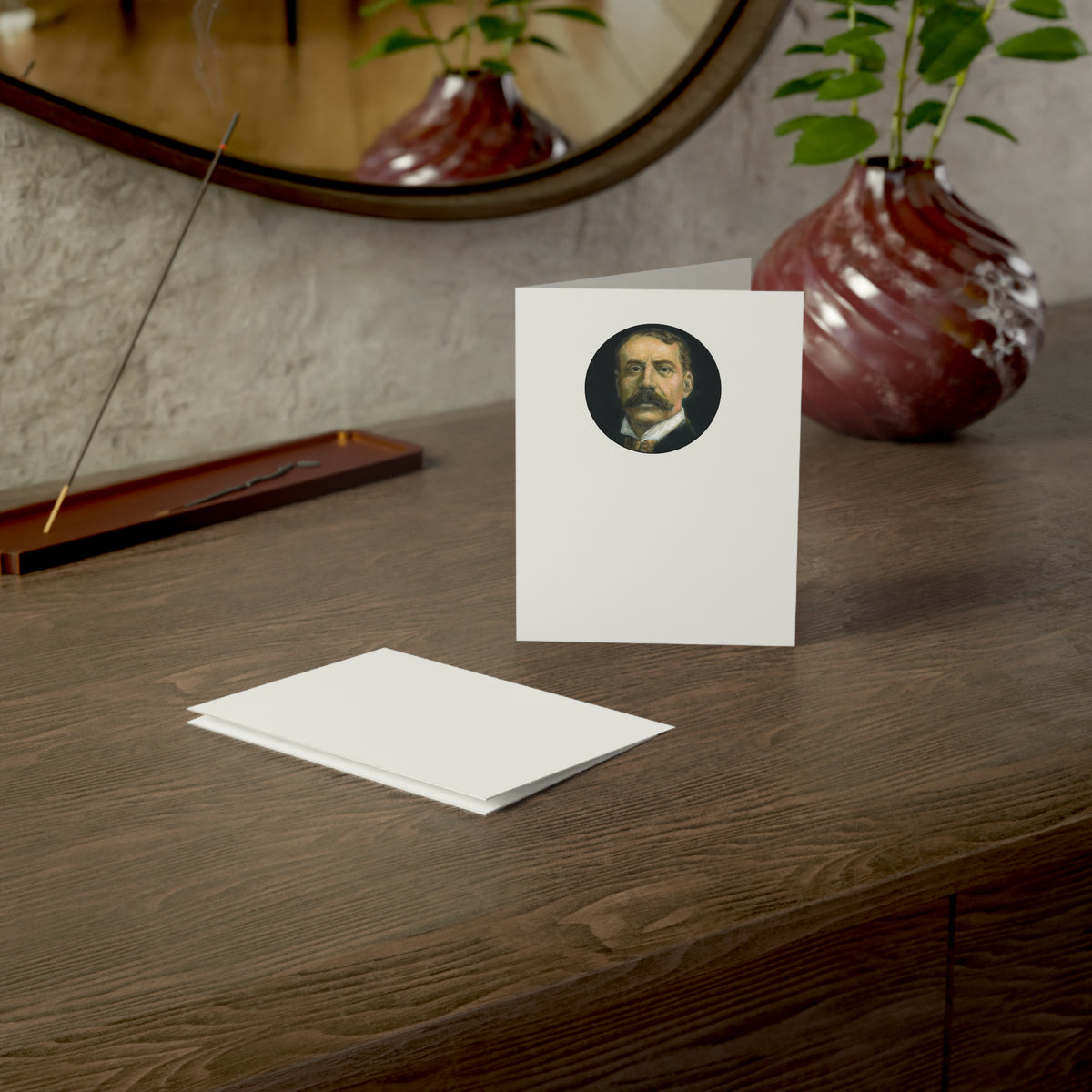
Edward Elgar Portrait Premium Notecards | Classical Music History Gift
Edward Elgar Portrait Premium Notecards | Classical Music History Gift
Couldn't load pickup availability
Share
The Face Behind the Name
The Face Behind the Name
Edward Elgar is one of the most famous British classical composers, though many people know his music long before they know his name or face. Pomp and Circumstance—later adapted into “Land of Hope and Glory” and widely used as graduation procession music—has become one of the most familiar ceremonial melodies in the world.
Elgar came from modest circumstances in the English Midlands and was largely self-taught as a composer. His father operated a music business, providing access to instruments, scores and a practical musical environment. Without the conventional elite training enjoyed by some contemporaries, Elgar developed a distinctive orchestral voice. The Enigma Variations, premiered in 1899, brought him major acclaim through a series of musical portraits connected to friends and loved ones.
His marches made his name ubiquitous in ceremonies, especially the first Pomp and Circumstance march, whose familiar theme became associated with graduations in the United States. Yet reducing him to that tune misses the emotional range of the Cello Concerto, the dramatic sweep of the oratorios and the affectionate mystery of his portraits in music. Elgar lived through a period of changing British identity and deep personal loss, especially after the death of his wife Alice. His music can sound imperial and confident one moment, private and uncertain the next. Both qualities belong to the composer behind the famous march.
Largely self-taught, Elgar emerged from provincial English musical life to international recognition. His Enigma Variations brought him fame, while his Cello Concerto later became one of the repertoire's most deeply felt works. The familiar graduation march is only one part of a musical career full of tenderness, wit and grandeur.
Graduates may hear Elgar's melody dozens of times without learning anything about the composer who wrote it. The ceremonial use of his music has become so familiar that it can obscure its original setting and emotional range. A portrait of Elgar asks listeners to hear the wider imagination behind the public march. He could write for a crowd and also express profound private grief.
Product Details & Care Instructions
Product Details & Care Instructions
Product Details
- Pack of 10 folded greeting cards with envelopes included
- Four sizes: 4.25" x 5.5", 5" x 7", 5.25" x 5.25" square and 5.5" x 8.5"
- Coated silk paper with a glossy protective finish
- Premium heavyweight 350 gsm paper for a substantial feel
- Vibrant, digitally printed colors with crisp detail
- Blank inside and back, ready for your own message
- Original WITS circular portrait artwork on the front
- Printed to order
Care Instructions
- Use a soft, clean and dry cloth to gently brush any dust or dirt off from the center of the card outwards.
A Note About Product Images
A Note About Product Images
Our product images include AI-generated lifestyle scenes and digital product mockups intended to illustrate how each item may look. While we strive to represent our designs, artwork placement, colors and product details accurately, the actual manufactured product may vary slightly from the images shown.