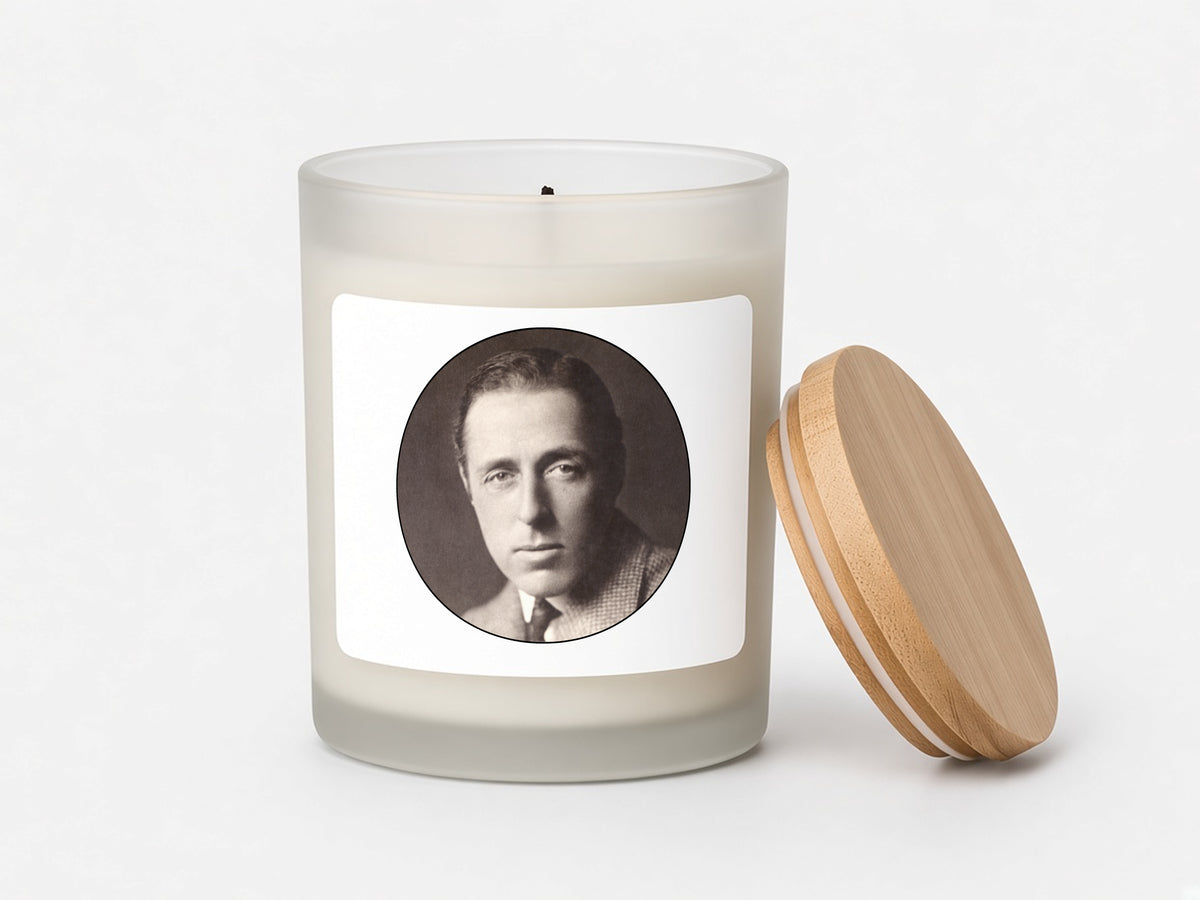
D. W. Griffith Portrait Candle | Silent Film History Gift
D. W. Griffith Portrait Candle | Silent Film History Gift
Couldn't load pickup availability
Share
The Face Behind the Name
The Face Behind the Name
D. W. Griffith helped shape the language of early cinema through pioneering techniques in editing, close-ups and large-scale storytelling. Often regarded as one of the foundational figures of motion pictures, his films transformed filmmaking from simple novelty into a dramatic art form. His influence on the development of modern filmmaking can still be seen throughout cinema today.
Griffith emerged from the rapidly growing American film industry when directors and performers were experimenting with ways to tell longer and more complex stories. His productions helped popularize dramatic editing, shifting viewpoints and large-scale narrative sequences. Working with collaborators in front of and behind the camera, he contributed to an evolving cinematic language that other filmmakers developed in different directions. His influence is undeniable, but the traditional story of a lone genius inventing film technique greatly oversimplifies cinema's collective history.
The Birth of a Nation, released in 1915, demonstrated the reach of feature filmmaking while promoting racist propaganda and a glorified depiction of the Ku Klux Klan. It sparked protests and contributed to harmful historical mythology. Griffith's later Intolerance was a technically ambitious response to criticism but did not erase the earlier film's damage. Any serious account of his career must hold artistic ambition and ethical consequences together. Film history becomes clearer when innovation is examined alongside the social power of the images being created.
Griffith's ambitious productions helped popularize film techniques that other directors developed further. His 1915 film The Birth of a Nation was commercially influential but promoted racist myths and glorified the Ku Klux Klan, prompting protests. Any account of his impact on cinema needs to acknowledge both his formal innovations and the real harm of that film's propaganda.
Film can move audiences through technique, but its influence also depends on what story it tells and whose viewpoint it privileges. Griffith's career demonstrates that formal innovation and harmful propaganda can coexist in a single body of work. Remembering both is not an attempt to cancel historical complexity; it is the necessary basis for understanding cinematic power. The famous director's face belongs to a history of artistry and responsibility.
Product Details & Care Instructions
Product Details & Care Instructions
Portrait candle with a historical design on the vessel. Available sizes and fragrances are displayed in the product options. Candle materials, container style and burn time vary by fulfillment model.
Candle Care & Safety
- Trim the wick to approximately 1/4 inch before lighting.
- Burn on a level, heat-resistant surface, away from drafts and flammable objects.
- Never leave a burning candle unattended. Keep away from children and pets.
- Allow wax to cool completely before moving the container.
- Stop burning when approximately 1/2 inch of wax remains.
A Note About Product Images
A Note About Product Images
Our product images include AI-generated lifestyle scenes and digital product mockups intended to illustrate how each item may look. While we strive to represent our designs, artwork placement, colors and product details accurately, the actual manufactured product may vary slightly from the images shown.